
QUALITY FIRST, INTEGRITY PARAMOUNT
Service 1
Core Advantages of Customization Services
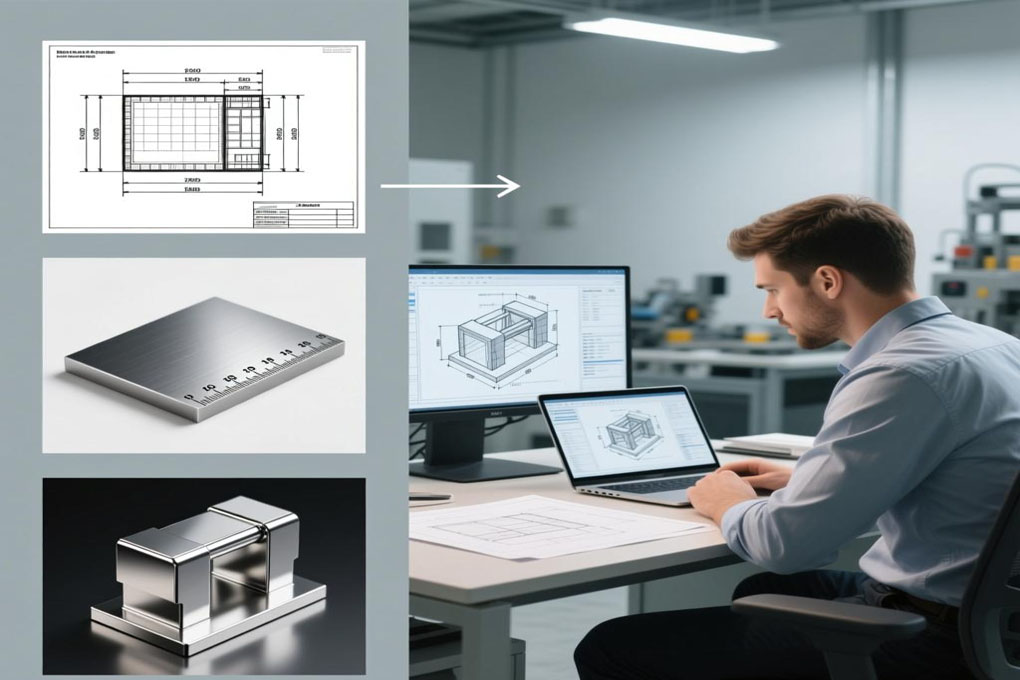
Drawings/Samples to Production: Supports customers in providing drawings, samples, or 3D models, quickly converting them into production plans.
Flexible Material Selection: Offers a range of stainless steel grades such as 201, 304, 316L, and 310S to meet diverse application requirements.
Comprehensive Process Coverage: Provides end-to-end manufacturing processes including laser cutting, CNC bending, argon arc welding, and surface treatments.
Quality Traceability: Ensures full traceability from raw materials to finished products, accompanied by material certifications and process reports.

Service 2
Real-Time Order Tracking with Personalized Service
At the heart of our offering is a commitment to transparency and accessibility. We understand the importance of keeping our clients informed every step of the way, from the initial placement of an order to the final delivery of the product. That’s why we’ve implemented a one-on-one service model that empowers our clients to actively follow the progress of their manufacturing orders.Dedicated Support Representative:
Each client is assigned a dedicated support representative who serves as their primary point of contact throughout the manufacturing process.
This representative is readily available to answer questions, provide updates, and address any concerns that may arise.
Customized Updates and Alerts:
Clients can choose to receive automated updates and alerts via email or SMS, ensuring they are always informed of significant milestones or changes in their order status.
These alerts can be tailored to the client’s preferences, ensuring they receive only the information that is most relevant to them.
Interactive Communication Channels:
We offer multiple channels for communication, including phone, email, and live chat, making it easy for clients to reach out to their dedicated representative whenever needed.
Our representatives are trained to provide prompt, accurate, and helpful responses, ensuring a seamless and efficient communication experience.
Service 3
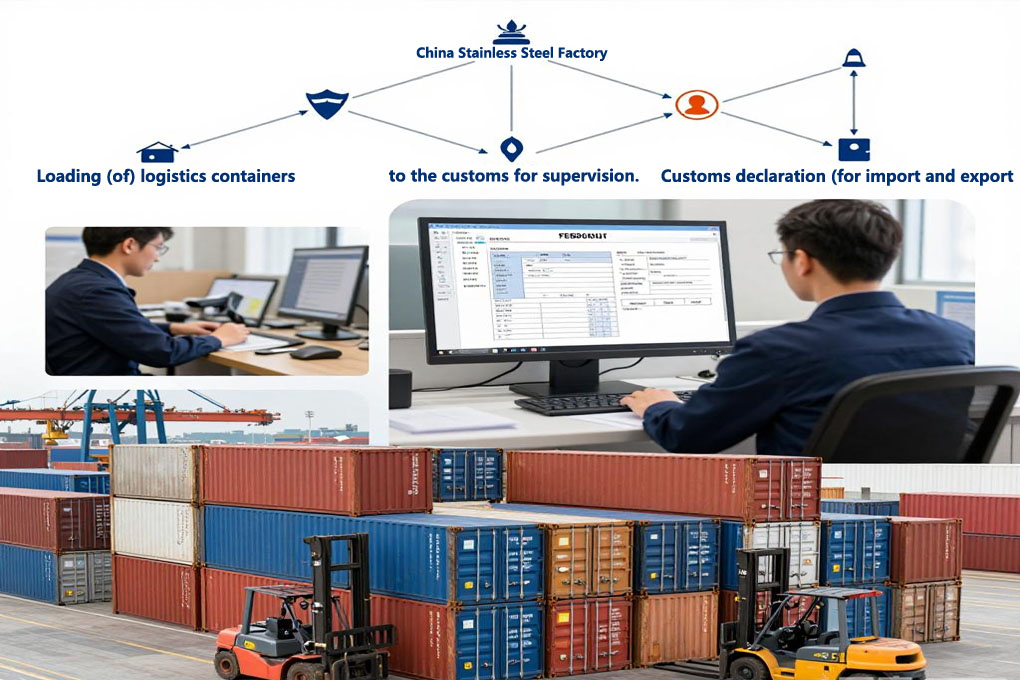
Logistics and Transportation Arrangement:
Based on the characteristics of the products and client needs, select the most suitable transportation method (sea freight, air freight, land transportation, etc.).
Manage the packaging, loading, transportation, and unloading processes of the goods to ensure their safe and punctual arrival.
Provide logistics tracking services to keep clients informed about the transportation status of their goods at any time.
Customs Declaration and Clearance Services:
Prepare and submit all necessary export and import documents, such as invoices, packing lists, certificates of origin, etc.
Handle communication with customs authorities to ensure the smooth progress of customs declaration and clearance procedures for the goods.
Assist in resolving potential issues related to tariffs, taxes, or trade barriers.
F.A.Q.
Will stainless steel products rust? Are they prone to deformation?
201 stainless steel belongs to austenitic stainless steel and is a type in the 200 series. Its composition features manganese replacing part of nickel, with chromium content at 16%-18%, nickel content at 0.9%-5.5%, and manganese content at 5.5%-11%. This material has lower cost and is commonly used for decorative pipes, industrial pipes, and shallow-drawing products, but its corrosion resistance and rust-proof performance are inferior to 304 stainless steel.
304 stainless steel contains 18% chromium and 8% nickel. Its surface oxide film provides rust and corrosion resistance, and it will not release harmful substances under normal use.
Health risks: Prolonged contact with acidic foods (such as tomatoes and vinegar) or high-temperature cooking may cause trace amounts of chromium and nickel to leach out, but this is far below harmful levels. Usage
precautions:
Avoid acidic foods: Do not stew foods like tomatoes or stir-fry dishes with vinegar for extended periods to prevent the leaching of trace metals.
Replace promptly: It is recommended to replace cookware if it is damaged, discolored, or scratched.
The core differences between 201 and 304 stainless steel lie in their composition, corrosion resistance, and price. 201 stainless steel has a higher manganese content and lower nickel content, resulting in lower cost but poorer corrosion resistance. It is suitable for low-demand environments such as decorative and industrial pipes. 304 stainless steel has higher chromium and nickel content, offering superior corrosion resistance, making it suitable for high-standard applications such as food contact and medical equipment. In terms of price, 201 stainless steel costs approximately one-third the price of 304 stainless steel.
Stainless steel products are indeed a smart choice, becoming a preferred option in home furnishings, kitchenware, and industrial applications thanks to their three core advantages: safety, durability, and wide applicability.
I. Safe and Reliable
Material Guarantee: Food-grade 304 stainless steel meets national standards and does not release harmful heavy metals at high temperatures, making it especially suitable for contact with acidic foods.
Health Protection: The surface oxide film prevents rust and corrosion, ensuring peace of mind during daily use.
II. Durable and Long-lasting
Robust Construction: Corrosion-resistant, high-temperature resistant, and with high mechanical strength, it has a service life of 5-8 years, far exceeding that of ordinary coated cookware.
Scratch and Abrasion Resistant: Surface treatment technology (such as brushing) enhances durability, keeping it looking bright and new even after long-term use.
III. Widely Applicable
Versatile Performer: Compatible with various cooktops, capable of handling everything from stir-frying to slow cooking.
Multi-scenario Applications: From tableware and countertops to medical devices, stainless steel is an ideal material due to its corrosion resistance and biocompatibility.
I. Thickness Classification and Range
Ultra-thin sheets (0.05-0.2mm)
Features: Extremely thin strips, commonly used in high-precision fields such as precision instruments and electronic components.
Example: The 0.015mm tearable steel developed by Taiyuan Iron and Steel Group, used in the new energy vehicle industry.
Thin sheets (0.2-4mm)
Features: Flexible and easy to process, with a smooth surface, suitable for decorative panels, home appliance casings, etc.
Example: Cold-rolled thin sheets, common specifications such as 0.5mm, 1.0mm, etc.
Medium-thick plates (4-20mm)
Features: Balances strength and cost, widely used in construction, furniture, and other fields.
Example: Hot-rolled medium-thick plates, thickness range 3-60mm, commonly used in building steel structures.
Thick plates (20-60mm)
Features: Strong load-bearing capacity, used in heavy industrial equipment and special structures.
Example: Thick plates with a thickness exceeding 20mm, used in load-bearing parts of bridges and piers.
Extra-thick plates (60-115mm)
Features: Meets the high-strength requirements of ships, pressure vessels, etc.
Example: Extra-thick plates can be up to 115mm thick, used in special projects such as nuclear power plants.
II. Process and Specifications
Cold rolling process: Suitable for thin sheets, with a smooth surface, common specifications such as 0.3mm, 1.0mm, etc.
Hot rolling process: Suitable for medium-thick and thick plates, thickness range 3-16mm, and up to 115mm in special cases.
III. Purchasing Suggestions
Thin sheets: Suitable for lightweight applications such as decoration and home appliance casings.
Medium-thick plates: Balances strength and cost, suitable for construction, furniture, and other fields.
Thick plates: Strong load-bearing capacity, suitable for heavy industrial equipment and special structures.
Extra-thick plates: Meets high-strength requirements, such as ships and pressure vessels.